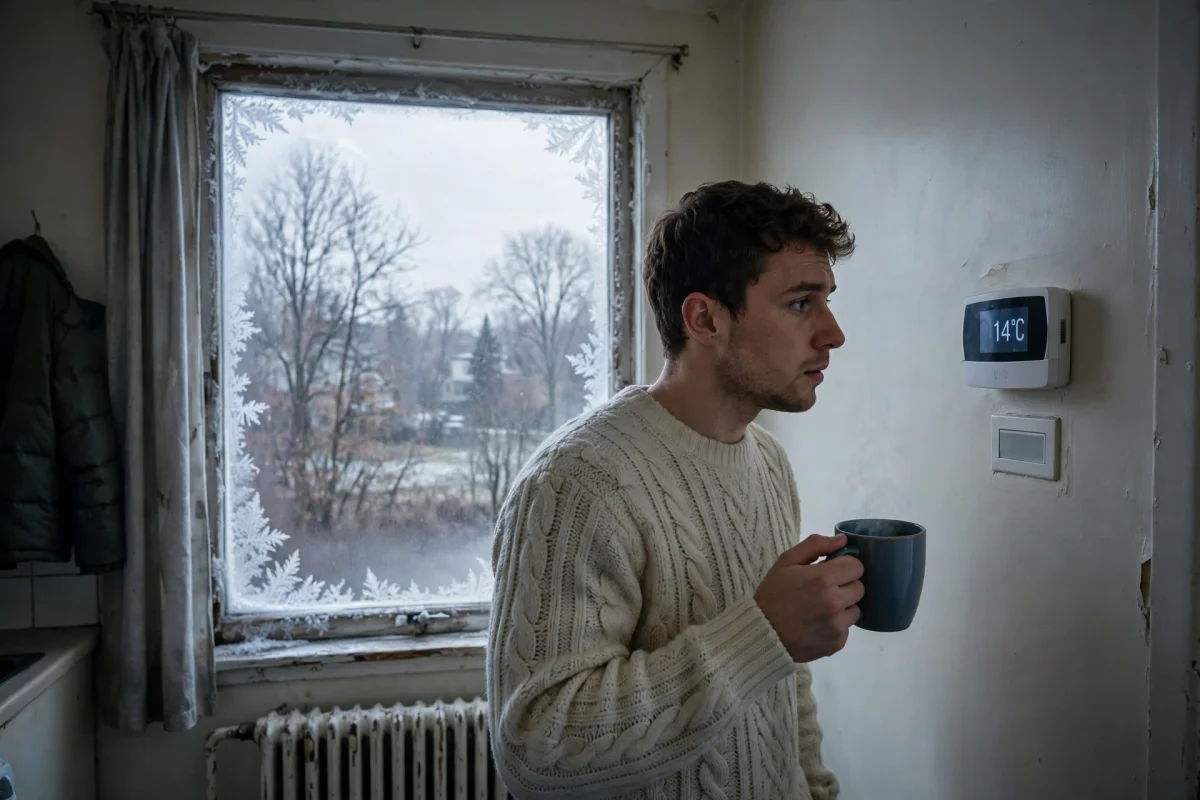
The first real cold nights of fall expose broken heating systems. This week, Toronto-area renters have been posting about exactly that: no heat, radiators that never warm up, a landlord who says to just wait it out. Heat is not a favour. In heating season, it is a legal obligation, and there is a clear order of steps that gets it fixed.
How warm does it have to be?
There is no single number for the whole province. The provincial floor is 20 degrees Celsius, measured about 1.5 metres above the floor and a metre from an outside wall. Under Ontario's rules, heat counts as a vital service from September 1 to June 15, which means a landlord who is responsible for supplying it cannot withhold it or interfere with its supply. LTB Guide to the RTA.html)
Cities can set a higher bar, and Toronto does. In Toronto, a landlord must maintain at least 21 degrees in all areas of a unit that is normally heated at the landlord's expense, from October 1 to May 15. That is Toronto Municipal Code Chapter 497, and the dates changed in April 2025: older guides that still say September 15 to June 1 are describing the old version of the rule. Brampton's rule is 20 degrees from September 15 to June 1, and Mississauga's is 20 degrees as well. Toronto, Mississauga and Brampton heat rules, October 2026
What if you pay for your own heat and control your own thermostat? Then the temperature is largely in your hands, but the landlord is not off the hook: the system still has to be capable of reaching the minimum, and the repair duty runs all year. How warm an Ontario rental has to be
A landlord cannot shut the heat off over unpaid rent
This comes up every winter, so let us be plain about it. A landlord cannot use heat as leverage. The Residential Tenancies Act says a landlord must not withhold the reasonable supply of a vital service or deliberately interfere with it, and heat is on that list during the heating season. That holds even if rent is late. Late rent has its own process at the Landlord and Tenant Board. Cutting the heat is not part of it, and it will hurt the landlord's case, not help it.
Section 20 of the Act also says a landlord has to keep the unit in a good state of repair and fit to live in. A lease clause that tries to hand all of that to the tenant does not override the Act.
First step: put it in writing, today
Tell your landlord or property manager in writing the day you notice the problem. A text or email works. Say the heat is out or the unit will not reach temperature, say when it started, and attach a photo of a thermometer reading if you can. If the problem drags on, take readings over a few days: date, time, and temperature, measured away from windows and outside walls.
This is what turns a complaint into a case. A bylaw officer or an adjudicator can act on a dated message. "I told them weeks ago" with nothing to show for it is a much harder sell. For landlords, that notice is useful too: a timestamp, a clear problem, and proof you moved on it. Treat no heat as an emergency. A good landlord gets someone out the same day, and keeps the tenant posted if a part has to be ordered.
If nothing happens, call 311
If your written request goes nowhere, call 311. In Toronto, Mississauga and Brampton, 311 takes heating complaints, and a bylaw officer can come out, take readings, and order the landlord to comply. Toronto's tenant guidance says landlords should respond to urgent vital-service requests like no heat within 24 hours, and the city says to contact 311 if the problem is not resolved within that window. Toronto, Mississauga and Brampton heat rules, October 2026
If the problem keeps going, the Landlord and Tenant Board is the next step. A T6 application asks the Board to order the landlord to do the repairs, and it can also bring a rent abatement for the time you lived without proper heat. A Board hearing takes a while, which is why the written notice and the 311 inspection come first.
One thing not to do: do not withhold rent to force the repair. Ontario tenants cannot withhold rent for repairs, even for something as serious as no heat, and doing it hands the landlord a non-payment case against you. Can Ontario tenants withhold rent for repairs? The pressure that actually works is the paper trail, the city inspection, and the Board application, in that order.
No heat in winter is stressful, and genuinely unsafe for kids, older tenants, and anyone with a health condition. But the ladder is clear: written notice, thermometer readings, 311, and then the Board if you have to go there. Follow it, keep the receipts, and do not let anyone tell you that waiting it out in a cold apartment is just part of renting in Ontario. It is not.